3D Christian Standing Cross Laser Cut: A Guide to Digital Files and Craftsmanship
The intersection of faith, art, and modern technology has opened new doors for creators looking to express their beliefs through tangible design. The 3D Christian Standing Cross Laser Cut is one such design that has gained significant traction among hobbyists, small business owners, and professional makers. However, before you rush to download or purchase, it is crucial to understand exactly what you are acquiring. This is not a physical object shipped in a box; it is a digital blueprint intended for your own fabrication. Misunderstanding this fundamental aspect is the most common pitfall for beginners entering the world of laser cutting.
Understanding the Digital Nature of Your Purchase
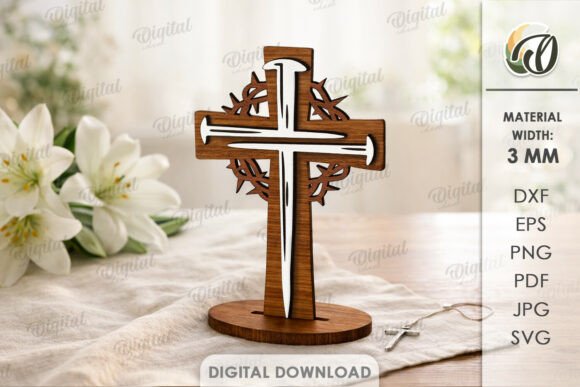
When browsing online marketplaces, product photography can be deceiving. You will see stunning images of finished crosses, often crafted from rich walnut, polished acrylic, or vibrant plywood. These photos serve as inspiration, showcasing the potential of the design when executed correctly. It is vital to remember that these are examples of what you can create, not what you will receive. Upon purchasing the 3D Christian Standing Cross Laser Cut file, you will receive a zip folder containing vector and raster files. No physical goods will be sent.
This distinction is critical for managing expectations. If you are looking for a ready-made gift to wrap and give immediately, this product is not the solution. Instead, it is a tool for creation. The package typically includes formats such as SVG, DXF, EPS, PDF, JPEG, and PNG. Each of these serves a specific purpose in the workflow. The vector formats (SVG, DXF, EPS) are essential for the actual cutting process on a laser machine, while the raster formats (JPEG, PNG) are useful for mockups, social media marketing, or client presentations. Understanding this ecosystem ensures you do not waste time trying to open a cutting file in an image editor that cannot handle vectors.
Common Mistakes in Material Selection and Thickness
One of the most overlooked details when working with 3D laser cut designs is material thickness. The design specifications for this particular cross indicate a required material width of 3mm. Ignoring this specification is a frequent error that leads to frustration and wasted resources. If you attempt to use 6mm wood, the interlocking tabs may not fit, causing the structure to collapse or fail to assemble. Conversely, using 1.5mm material might result in a piece that feels flimsy and lacks the structural integrity needed for a standing display.
Why does 3mm matter? In 3D laser cutting, the design relies on precise kerf compensation—the amount of material removed by the laser beam. The joints are engineered specifically for a 3mm substrate. Deviating from this without adjusting the file settings can ruin the project. Before you buy, check your inventory or local supplier stock. Do you have access to high-quality 3mm birch plywood, basswood, or acrylic? If your only option is 4mm MDF, you will need to scale the file or find a different design. Planning your material acquisition alongside your file purchase saves time and prevents the disappointment of a failed assembly.
Navigating File Formats and Software Compatibility
Another area where creators often stumble is software compatibility. Receiving a zip file with multiple extensions can be confusing if you are new to the craft. A common mistake is attempting to import a DXF file into a program designed only for SVGs, or vice versa, leading to distorted geometry or missing lines. To avoid this, ensure your laser cutting software supports the specific format you intend to use.
- SVG: Ideal for lightburn, Illustrator, and many web-based viewers. Great for general cutting paths.
- DXF: The industry standard for CAD and laser engraving machines like Glowforge or Trotec. Highly reliable for precise dimensions.
- EPS: Best for professional graphic design workflows in Adobe Illustrator.
- PNG/JPEG: Use these strictly for visual reference or marketing materials, never for cutting.
If you are a beginner, start by testing the file in a free viewer before sending it to your machine. Verify that the layers are organized correctly and that the 3mm offset is accurate. A quick preview can save you from burning through expensive material due to a scaling error.
Strategic Applications for Home and Office
Once you have navigated the technical hurdles, the possibilities for creation become endless. The 3D Christian Standing Cross Laser Cut is an excellent solution for creating original decor for your home or office. Unlike mass-produced items found in big-box stores, a laser-cut cross allows for personalization. You can choose the grain of the wood, the color of the acrylic, or even add custom engravings to the base.
For entrepreneurs and small business owners, this design offers a viable product line. Imagine offering these crosses at church bazaars, craft fairs, or through your own e-commerce store. Because you control the production, you can offer customization options that competitors cannot match. However, success in this area requires attention to detail. Ensure your finishing work—sanding, sealing, and polishing—is impeccable. A poorly sanded edge can detract from the spiritual significance and aesthetic appeal of the piece. Treat every unit as a reflection of your craftsmanship and respect for the symbol.
Best Practices for a Successful Project
To maximize your satisfaction with this digital product, adopt a methodical approach. First, always download the files and inspect them on your computer before starting any cutting. Second, perform a test run on scrap material of the exact same thickness (3mm) as your final piece. This allows you to adjust power and speed settings without risking your primary material.
Third, consider the environment where the cross will stand. Is it for a desk, a mantle, or a shelf? The stability of the base depends on the weight of the material. Heavier woods provide more stability but require more powerful lasers to cut. Lighter materials are easier to cut but may tip over easily if the base is not weighted properly. By anticipating these variables, you ensure the final product is both beautiful and functional.
Finally, remember that support is available. If you encounter issues with the file or have questions about the application, do not hesitate to reach out to the seller. Clear communication can resolve confusion quickly. Whether you are a seasoned professional or a curious beginner, approaching the 3D Christian Standing Cross Laser Cut with preparation and patience will yield rewarding results. Happy shopping and happy creating.