Abstract Fluid Background Organic Waves: A Design Evaluation
In the evolving landscape of digital aesthetics, background elements play a critical role in establishing visual hierarchy and user engagement. One prominent style gaining traction is the Abstract Fluid Background Organic Waves. This design approach combines flowing, liquid-like forms with structured geometric elements to create dynamic visual backdrops. For designers, developers, and content creators, understanding the utility, limitations, and application of this style is essential for making informed decisions about project assets.
Defining the Visual Style
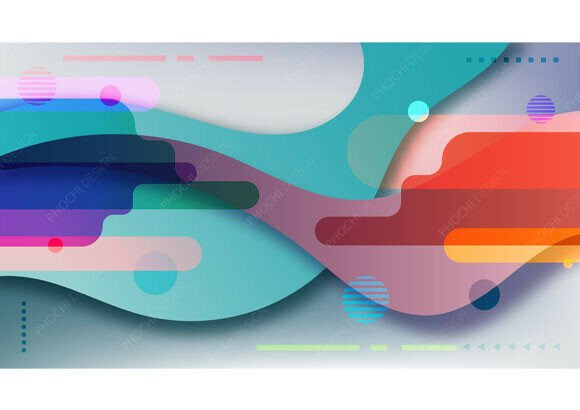
The term Abstract Fluid Background Organic Waves refers to a specific category of graphic design that mimics the movement of liquids or gases. Unlike rigid grid systems or static flat colors, these backgrounds utilize curves, gradients, and blending modes to simulate depth and motion. When paired with teal and coral color palettes, the result is often a vibrant contrast that captures attention without overwhelming foreground content.
A distinct variation of this style incorporates geometric pill shapes layered in a 3D vector format. These elements introduce structure to the organic chaos, creating a balance between fluidity and precision. The "3D layered" aspect suggests depth, achieved through shadowing, opacity changes, and overlapping vectors rather than actual three-dimensional modeling software. Because these graphics are created as 100% vector files, they maintain crisp edges and smooth gradients regardless of how much they are scaled.
Why Consider This Design Approach?
Designers often seek out Abstract Fluid Background Organic Waves for several practical reasons. The primary driver is the need for modernization. As web design trends shift away from minimalist white spaces toward more immersive experiences, fluid backgrounds offer a way to add personality and energy to a site without clutter.
Furthermore, the versatility of vector formats makes these assets highly adaptable. Since the shapes and colors are editable, a single asset can be customized to match various brand guidelines. The inclusion of copy space within the composition ensures that text remains legible, addressing a common pain point in busy background designs. For teams working on multiple platforms, the ability to download both EPS (for print or high-end editing) and JPG (for quick web deployment) streamlines the workflow significantly.
Benefits and Strategic Advantages
Adopting this style offers several tangible benefits for digital projects:
- Scalability and Resolution Independence: As vector-based graphics, these backgrounds do not pixelate when resized. This is crucial for responsive web design, where the same image must look sharp on a mobile screen and a large desktop monitor.
- Customization Potential: With editable shapes and colors, designers can adjust the teal and coral tones to align with specific brand identities. The absence of watermarks ensures professional output ready for immediate client delivery.
- Visual Depth: The combination of organic waves and 3D layered pill shapes creates an illusion of depth. This can make a flat website feel more dimensional and engaging, potentially increasing user dwell time.
- Workflow Efficiency: Well-organized file structures allow for faster editing times. Designers can isolate specific layers to tweak individual elements without reconstructing the entire graphic.
Tradeoffs and Considerations
While the aesthetic appeal is clear, there are tradeoffs to consider before integrating Abstract Fluid Background Organic Waves into a project. The most significant factor is file size and performance. While vectors are efficient, complex layering and high-resolution raster exports (JPG) can increase page load times if not optimized correctly. Heavy backgrounds may negatively impact Core Web Vitals scores, which are critical for search engine ranking.
Additionally, the vibrancy of teal and coral palettes may not suit all industries. In sectors requiring a sense of seriousness, such as law, finance, or medical services, overly playful or colorful backgrounds might undermine credibility. The organic nature of the waves can also clash with strict corporate identity guidelines that mandate rigid geometry and neutral tones.
Another consideration is the learning curve. To fully leverage the editable nature of EPS files, users require proficiency in vector editing software like Adobe Illustrator. Without these tools, the asset becomes a static image, limiting its potential for customization.
Ideal Use Cases
This design style is a strong fit for specific scenarios where visual impact is a priority. It excels in:
- Modern Landing Pages: Startups and tech companies often use fluid backgrounds to convey innovation and agility. The dynamic movement suggests forward momentum.
- Digital Marketing Campaigns: Social media banners and email headers benefit from the vibrant colors and eye-catching composition of organic waves.
- Creative Portfolios: Designers and artists can use these backgrounds to showcase their work in a context that feels contemporary and polished.
- Event Websites: Conferences, festivals, and product launches often require energetic visuals to generate excitement, making this style appropriate.
When to Consider Alternatives
Despite its strengths, Abstract Fluid Background Organic Waves may not be the right choice for every project. Alternatives should be considered in the following situations:
- Content-Heavy Sites: If a webpage contains dense blocks of text, such as a news portal or academic journal, a busy background can reduce readability. In these cases, a solid color or subtle texture is preferable.
- Performance-Critical Applications: For applications where speed is paramount, such as utility apps or e-commerce checkout flows, minimizing visual complexity is essential to prevent friction.
- Strict Brand Compliance: Brands with rigid visual identity systems may find the organic nature of these waves incompatible with their established logo usage and typography rules.
- Print Media Limitations: While the EPS format supports print, the specific color profiles used for vibrant digital screens (like teal and coral) may not translate accurately to CMYK printing without significant adjustment.
Decision-Making Insights
To determine if this asset aligns with your goals, evaluate your project against three key criteria: audience expectation, technical constraints, and brand alignment. Ask yourself if the target demographic responds well to vibrant, modern aesthetics. Assess whether your hosting environment can handle the file sizes associated with high-quality vector exports. Finally, verify that the editable nature of the file allows you to meet specific branding requirements without extensive redesign work.
If the answer to these questions is affirmative, Abstract Fluid Background Organic Waves can serve as a powerful tool in your design arsenal. However, if the project demands minimalism, ultra-fast loading speeds, or strict adherence to traditional corporate styles, exploring alternative backgrounds may yield better results. Ultimately, the decision should rest on how well the visual element supports the core message and functionality of the digital experience.