Cute Robot DIY 3D Papercraft: Build Your Companion
In a digital age where screens dominate our attention, there is a refreshing return to tactile creativity. The Cute Robot DIY 3D Papercraft project offers exactly that—a hands-on escape into the world of engineering and art using nothing but paper and patience. This isn't just a simple cut-and-paste activity; it is a sophisticated design exercise that results in a stunning, intergalactic companion ready to take center stage in your home or office. Whether you are an educator looking for a STEM demonstration, a designer seeking a unique prop, or a parent wanting a quality weekend activity with your children, this Polyfold3D template provides a structured yet imaginative path to creation.
The Intersection of Design and Play
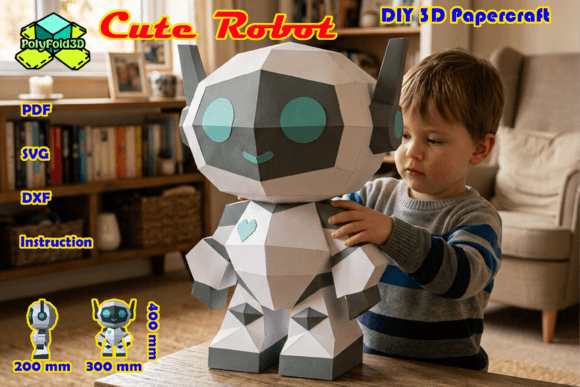
At its core, the Cute Robot DIY 3D Papercraft is a study in geometric precision disguised as whimsy. Unlike flat origami, this project utilizes polyhedron folding techniques to create a robust three-dimensional structure. The design balances adorable aesthetics with structural integrity, ensuring the final model stands tall and proud. The robot's features—large expressive eyes, rounded limbs, and a sturdy chassis—are carefully engineered to be both visually appealing and mechanically sound once assembled.
What makes this specific template stand out is its versatility across different skill levels. For beginners, it serves as an accessible introduction to 3D modeling concepts without requiring expensive equipment. For experienced crafters, the intricate details offer a satisfying challenge that tests precision and attention to detail. The finished model is substantial, boasting impressive dimensions that make it a true statement piece rather than a desk trinket.
Impressive Scale and Presence
One of the most notable characteristics of this project is its size. Many papercraft models shrink when printed on standard paper, losing their impact. However, this template is designed for grandeur. When fully assembled, the robot reaches a height of 400 mm (15.7 inches), with a width of 300 mm (11.8 inches) and a depth of 200 mm (7.9 inches). These dimensions ensure the robot commands attention. It is large enough to be seen from across a room, making it perfect for nursery decor, event displays, or as a centerpiece in a tech-themed workspace.
This scale transforms the project from a simple craft into a functional piece of interior design. The sheer volume of the model allows for creative customization, such as painting specific sections, adding LED lights inside the translucent panels, or attaching small accessories. The physical presence of the robot creates a focal point that sparks conversation and curiosity, bridging the gap between childhood nostalgia and modern design sensibilities.
Digital Precision Meets Analog Craft
The beauty of the Cute Robot DIY 3D Papercraft lies in its hybrid nature. It leverages modern digital tools to achieve analog perfection. As a digital download, the package includes everything needed for various cutting methods, catering to both high-tech enthusiasts and traditional crafters. You will receive SVG files optimized for Cricut Design Space and Silhouette Designer Edition, DXF files for Silhouette Studio Basic Edition, and high-resolution printable PDFs for manual cutting.
This multi-format approach ensures accessibility regardless of your toolkit. If you own a cutting machine, the vector files allow for rapid, precise production of the complex shapes required for the robot's body. For those who prefer the meditative rhythm of scissors and a craft knife, the PDF templates provide clear lines and fold guides that are easy to follow.
Navigating Software Nuances
While the digital files streamline the process, they do require a bit of technical know-how, particularly for Cricut users. Recent software updates have introduced scaling quirks that can compromise the fit of the pieces if not addressed. To ensure your robot parts align perfectly during assembly, it is crucial to apply a specific fix immediately after importing the SVG file.
Upon import, you must group all elements within the software. Look for the included Safety Boundary Box, which acts as your calibration guide. Manually adjust the width to exactly 190 mm while keeping the aspect ratio lock enabled. Once the boundary measures precisely 190 mm by 277 mm, your file is correctly scaled and ready for cutting. Skipping this step often leads to frustrating gaps or overlaps during the gluing phase, so taking these few extra seconds ensures a seamless build experience.
Practical Applications Across Environments
The utility of this papercraft extends far beyond a solitary hobby. Its adaptable nature makes it a valuable asset in professional, educational, and commercial settings.
- Educational Tool: In classrooms, the Cute Robot DIY 3D Papercraft serves as an excellent vehicle for teaching geometry, spatial reasoning, and following instructions. Teachers can use the assembly process to explain concepts like symmetry, surface area, and structural stability. It turns abstract math lessons into tangible, engaging activities.
- Office Decor and Branding: For entrepreneurs and business owners, a custom-built robot can serve as a unique brand mascot. Imagine placing a fleet of these robots on reception desks or using them as props in marketing photoshoots. They add a touch of personality and innovation to a corporate environment, signaling creativity and forward-thinking.
- Event and Exhibition Displays: Marketers and event planners can utilize the large scale of the model for trade shows or product launches. Because the materials are lightweight yet durable, they are easy to transport and set up. A cluster of these robots can create an immersive "tech zone" that draws attendees in.
- Therapeutic Crafting: For adults seeking stress relief, the repetitive, focused nature of cutting and folding provides a form of mindfulness. The clear, step-by-step instructions reduce cognitive load, allowing the crafter to enter a flow state while producing something beautiful.
Materials and Assembly Considerations
Success with any papercraft project hinges on material selection. While the template is designed for standard cardstock, the weight of the paper significantly impacts the final result. For a model of this size, we recommend using cardstock ranging from 200 gsm to 300 gsm. Paper that is too thin may buckle under the robot's own weight, while paper that is too thick can become difficult to fold along tight creases.
Adhesive choice is equally critical. Standard glue sticks often lack the holding power required for a 400 mm structure. Instead, opt for a strong liquid craft glue or double-sided tape designed for heavy-duty applications. When assembling, work in a clean, well-lit space and take your time with each joint. The step-by-step PDF guide provided in the download walks you through the process logically, ensuring you understand how each component interacts before committing the glue.
Customization Potential
Once the base structure is complete, the Cute Robot DIY 3D Papercraft becomes a canvas for personal expression. You can paint the robot to match a specific color scheme, wrap it in patterned paper, or even add electronic components. For example, inserting a small battery-operated LED strip inside the head can give the robot glowing eyes, enhancing its intergalactic appeal. This level of customization makes every unit unique, turning a mass-produced template into a one-of-a-kind creation.
Why Choose This Project?
In a world saturated with instant gratification, the Cute Robot DIY 3D Papercraft offers the reward of earned accomplishment. It combines the joy of building with the satisfaction of creating something functional and decorative. Whether you are decorating a nursery with a friendly guardian for a child, adding a quirky element to your startup's office, or simply enjoying a productive afternoon away from screens, this project delivers value in spades.
With its robust digital assets, clear instructions, and impressive final dimensions, this template removes the barriers to entry for high-quality papercraft. It invites you to slow down, engage your hands, and bring a little bit of intergalactic charm into your reality. The result is not just a paper robot, but a testament to your creativity and a lasting reminder of the joy found in making things with your own two hands.