Bringing Ocean Depths to Life: A Deep Dive into the 3D Layered Dolphin Laser Cut File
The intersection of digital design and physical craftsmanship has opened new avenues for creators seeking to produce intricate, multi-dimensional art. Among the most sought-after designs in this realm is the 3D Layered Dolphin Laser Cut File. This specific digital asset represents more than just a silhouette; it is a comprehensive blueprint for constructing a scene that captures the fluidity and depth of the ocean within a single frame. By utilizing advanced layering techniques, designers can transform flat materials like wood, acrylic, or MDF into dynamic wall art that tells a story through depth and shadow.
The Anatomy of a Multi-Layered Marine Design
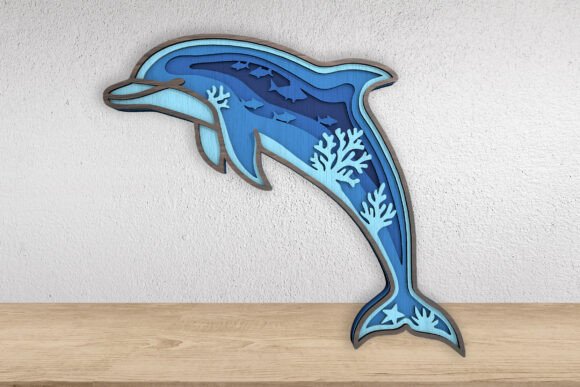
At its core, the 3D Layered Dolphin Laser Cut File is engineered to maximize visual impact through stratification. Unlike traditional single-layer cuts where the subject is merely an outline, this design breaks the dolphin down into distinct planes. The outermost layer typically defines the majestic curve of the dolphin's body, serving as the frame for the internal narrative. Inside this silhouette, a captivating underwater scene comes to life, complete with swimming fish, coral reefs, and a starfish on the tail.
This internal complexity is what distinguishes high-quality layered files from basic vector graphics. The design incorporates negative space and positive elements that interlock when assembled. For instance, the coral reefs are often designed on a middle layer, allowing them to appear suspended in the water behind the dolphin but in front of the background. The inclusion of smaller details, such as individual fish scales or the texture of the starfish, requires precise vector paths that are optimized for laser cutting precision. When these layers are stacked with spacers or adhesive, the result is a three-dimensional object that casts interesting shadows and invites viewers to look closer at the hidden details within the dolphin's form.
Technical Specifications and Software Compatibility
For professionals and hobbyists alike, the versatility of file formats is a critical factor in the success of any CNC or laser cutting project. This digital download features a beautifully detailed, multi-layer dolphin design perfect for laser cutting and CNC machines, ensuring broad compatibility across the industry. You will receive 1 ZIP file including SVG file, AI file, DWG file, EPS file, DXF file, and PDF file. This comprehensive suite of formats addresses the diverse needs of different software ecosystems.
Understanding the Format Ecosystem:
- SVG (Scalable Vector Graphics): Ideal for web-based design tools and widely supported by consumer-grade laser cutters like Glowforge and Cricut Explore.
- AI (Adobe Illustrator) and EPS (Encapsulated PostScript): These are the standards for professional graphic design workflows, offering full editability of anchor points and color profiles.
- DWG and DXF: Essential for CAD software and industrial CNC routers, providing the geometric precision required for large-scale manufacturing or complex machinery setups.
- PDF: Useful for quick viewing, printing instructions, or use in RIP software for certain cutting applications.
It is imperative to note that while the file variety is extensive, users must ensure their specific machine supports the chosen format before initiating the workflow. Please make sure your software machine supports all files before purchasing. Most modern laser engravers and CNC routers handle DXF and SVG natively, but older industrial systems may require the DWG format. Understanding these technical nuances ensures a smooth transition from digital concept to physical reality.
Workflow Integration for Creators and Businesses
Implementing the 3D Layered Dolphin Laser Cut File into a production workflow involves several strategic steps, from material selection to final assembly. For small business owners looking to expand their product line, this design offers a scalable solution for creating unique ocean-themed wall art, home decor, or personalized gifts. The process begins with importing the vector file into the machine's control software. Here, the user must assign different cut lines to different layers, ensuring that the nesting of pieces is optimized to minimize material waste.
Material choice plays a pivotal role in the final aesthetic. Light-colored woods like birch plywood or basswood provide a natural contrast that highlights the intricate inner details of the coral and fish. Conversely, acrylic sheets can offer a translucent effect, especially when backlit, mimicking the glow of deep-sea bioluminescence. For those using MDF, painting becomes a crucial step; the layered nature of the design allows for creative shading techniques where each layer can be painted a slightly different hue to enhance the perception of depth.
Assembly is where the true magic happens. Because the design includes a starfish on the tail and various fish inside the body, alignment markers are often included in the file to assist in stacking. Using double-sided foam tape or specialized wooden spacers between layers creates the necessary gaps for light and shadow to play across the surface. This technique not only adds structural integrity but also transforms a flat cutout into a sculpture that commands attention on a wall or shelf.
Applications Beyond Standard Wall Art
While the primary use case for this design is decorative wall art, the versatility of the 3D Layered Dolphin Laser Cut File extends into various other creative domains. Educators, for example, can utilize these files to create tactile teaching aids for marine biology classes. The clear distinction between the dolphin and its environment makes it an excellent tool for discussing ecosystems, food chains, and ocean habitats. Students can assemble the models themselves, gaining hands-on experience with both engineering concepts and biological facts.
In the realm of event planning and interior design, these layered panels serve as stunning centerpieces or backdrop elements for beach-themed weddings and corporate events. The ability to scale the design means it can be produced as a small desk ornament or a massive feature wall installation. Furthermore, gift shops and boutique retailers find immense value in this design for personalized items. By adding names, dates, or custom messages to the base layer, the dolphin becomes a commemorative piece for birthdays, graduations, or retirement parties, celebrating a love for the ocean or a specific milestone.
Researchers and hobbyists interested in sustainable crafts also appreciate the efficiency of this digital product. Since no physical inventory is held until a sale is made, businesses can operate on a print-on-demand model, significantly reducing overhead and environmental waste. The digital nature of the file allows for instant updates or variations, enabling creators to adapt quickly to market trends without the risk of unsold stock.
Considerations for Successful Execution
Despite the robustness of the file set, successful execution requires a baseline of technical proficiency. PLEASE NOTE • You are purchasing a digital product. We will not send you any physical product. This distinction is vital for setting expectations; the value lies in the intellectual property and the design data, not a tangible item shipped in a box. Consequently, basic knowledge of your software and how to use digital files with it is required. Users unfamiliar with vector editing or machine calibration may need to invest time in learning curves regarding power settings, speed, and focal point adjustments.
One common challenge in layered projects is the management of kerf—the width of material removed by the laser blade. If the design relies on tight tolerances for interlocking parts, the kerf can cause pieces to fit too loosely or not at all. It is advisable to test the design on scrap material first, adjusting the vector paths if necessary to account for the specific laser head being used. Additionally, the complexity of the internal scene, with its fine details like the coral reefs, demands a machine capable of high-resolution cutting. Lower-powered diode lasers might struggle with the intricate inner lines, potentially resulting in incomplete cuts or excessive charring.
Furthermore, the aesthetic outcome depends heavily on the finishing touches. Sanding the edges of the layers removes soot and burn marks, ensuring a clean presentation. Sealing the wood or acrylic protects the finish and enhances the colors, particularly if the project is intended for outdoor use or high-traffic areas. Attention to these details separates a good project from a professional-grade piece.
Future Trends in Digital Fabrication
The popularity of designs like the 3D Layered Dolphin Laser Cut File reflects a broader trend in the maker movement toward hyper-personalization and dimensional storytelling. As laser cutting technology becomes more accessible and affordable, the demand for complex, ready-to-use vector files continues to rise. Creators are moving away from simple silhouettes toward designs that offer narrative depth and interactive assembly.
We are likely to see an increase in hybrid projects where laser-cut layers are combined with 3D printed components or electronic elements. Imagine a version of this dolphin design where the internal fish are actually moving parts driven by small motors, or where LED strips are embedded between the layers to simulate an underwater light show. The foundational vector data provided in this download serves as the perfect starting point for such innovations. As the community of makers grows, sharing techniques for optimizing these files for different materials and machines will further drive the evolution of this craft.
Ultimately, the 3D Layered Dolphin Laser Cut File stands as a testament to the power of digital tools in enhancing physical creativity. It bridges the gap between the imagination of the designer and the tangible reality of the finished object. Whether used by a professional manufacturer scaling up production or a weekend hobbyist crafting a gift for a loved one, this design offers a rich, rewarding experience that celebrates the beauty of the ocean through the lens of modern technology. HAPPY SHOPPING to all who embark on this creative journey, knowing that the possibilities are as vast as the sea itself.